The Modern Paradigm: From Passive Files to Active Agents
In the digital landscape of 2026, the internet has undergone its most profound metamorphosis. We have moved past the era of 'browsing' a static library of documents and entered the era of 'orchestrating' a mesh of intelligent capabilities. This shift from a web of pages to a web of intent marks the true beginning of the Agentic Web.
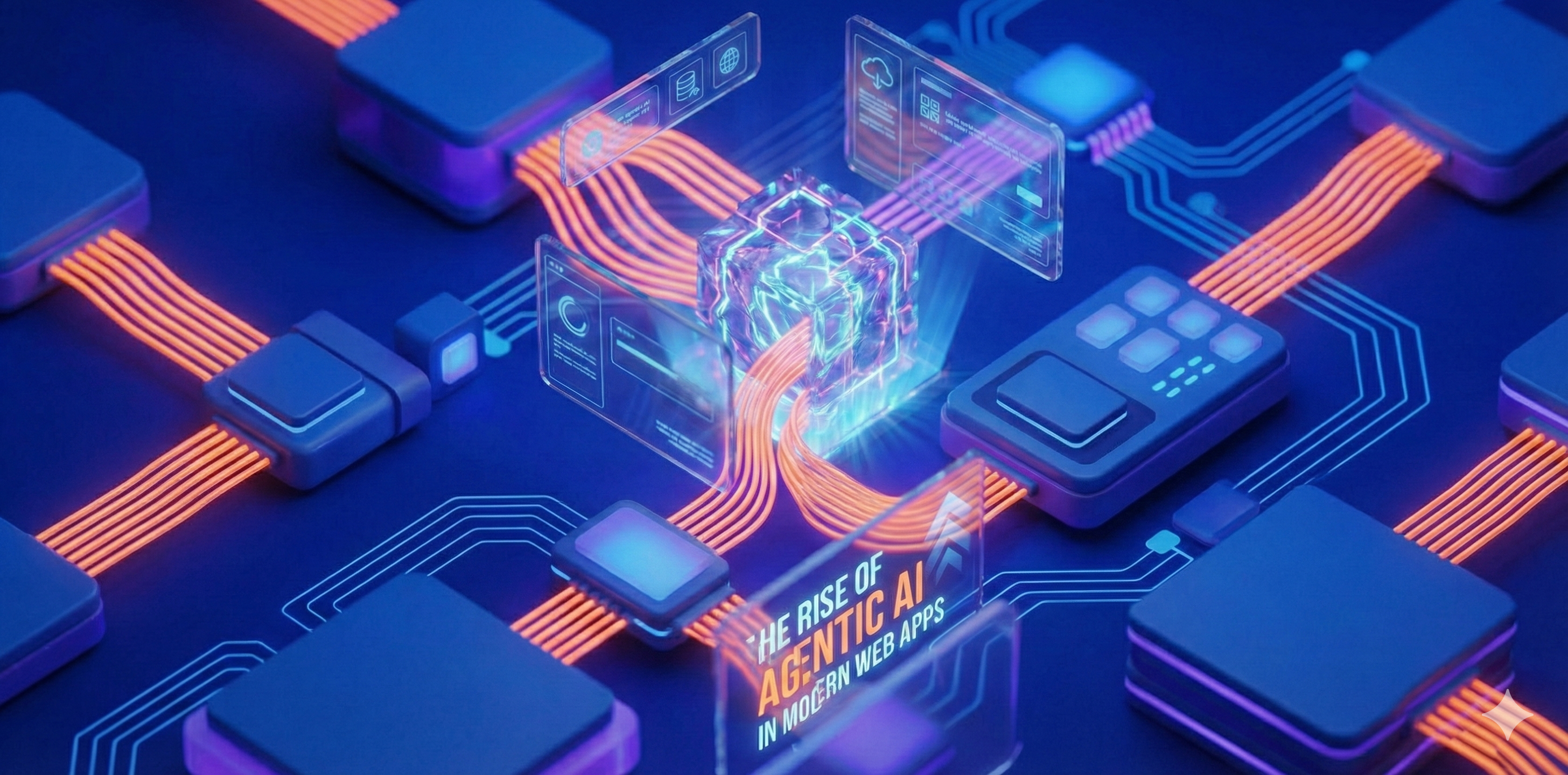
1. The Static Frontier: The Digital Pamphlet (Web 1.0)
The first decade of the web was defined by its passivity. Sites were essentially Digital Pamphlets. Constructed with raw HTML and basic table layouts, these documents were static files stored on a server. There was no 'user state' and virtually no interactivity beyond the hyperlink.
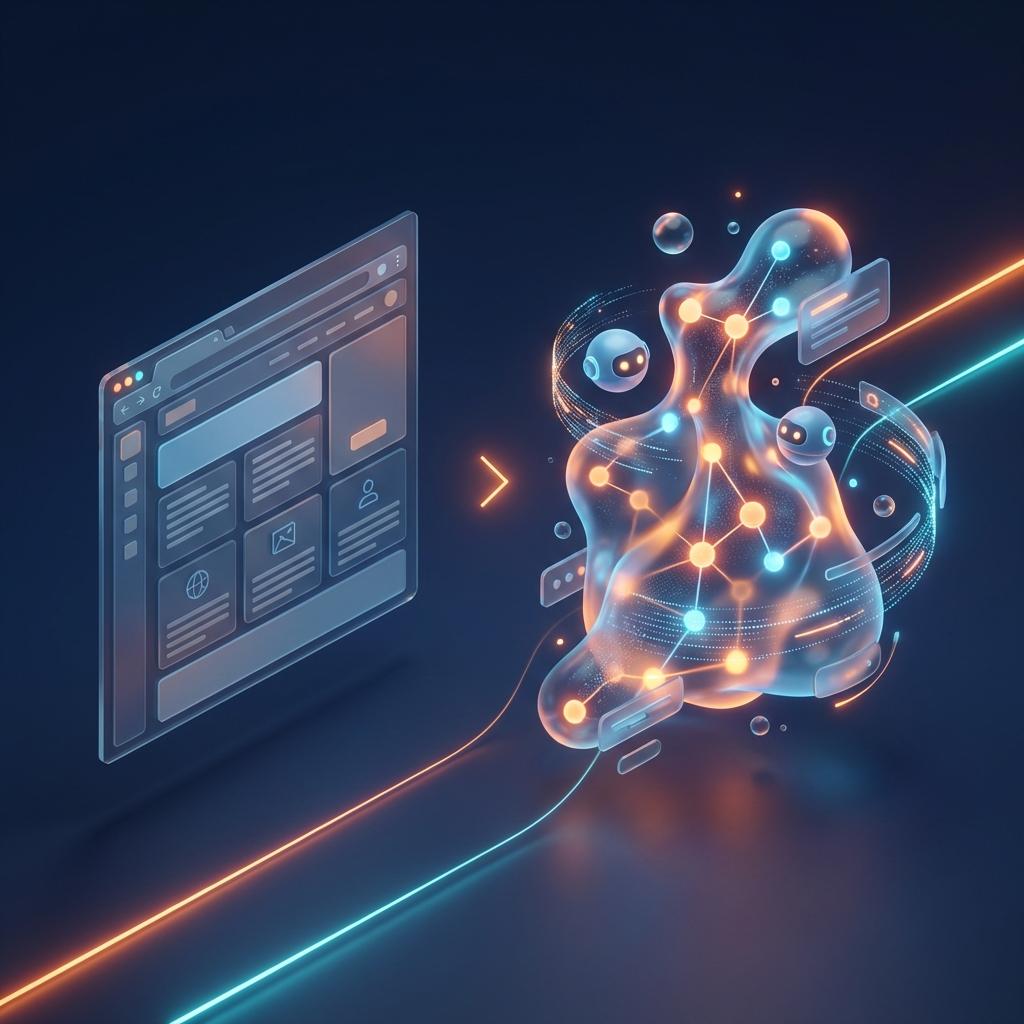
Developers of this era used tools like Microsoft FrontPage and Dreamweaver to manually stitch together hierarchies of documents. If a price changed on a catalog, a developer had to open a '.html' file, change a string, and re-upload it via FTP. It was slow and clunky, but it established the global foundation for information exchange.
2. The Dynamic Awakening: The Social Web (Web 2.0)
The early 2000s introduced the first major architectural pivot: the rise of Server-Side Rendering (SSR). Technologies like PHP and Ruby on Rails allowed developers to separate content from presentation.

The true turning point was AJAX (Asynchronous JavaScript and XML). Suddenly, a website could update a specific section of its UI—like a new message appearing in an inbox—without refreshing the entire page. This interactivity birthed the social web (Facebook, Twitter, Flickr). The web was no longer a collection of files; it was a dynamic portal into real-time data.
3. The Liquid Interface: The Appification Era
As the smartphone became our primary gateway to the internet, we needed the web to feel like native software. This gave rise to the Single Page Application (SPA) era, dominated by frameworks like React and Vue.

In this period, we moved complexity from the server to the browser. Websites became Products. We stopped thinking about 'pages' and started thinking about Component Systems. Content shifted into Headless CMSs, delivered via APIs. The web became a high-performance, liquid interface, yet it still relied on a fundamental truth: the user must find the content.
4. 2026: The Year of the Agentic Web
Today, the friction of 'searching and finding' is being eliminated. The Agentic Web means we are no longer building views; we are building Intelligent Capabilities.
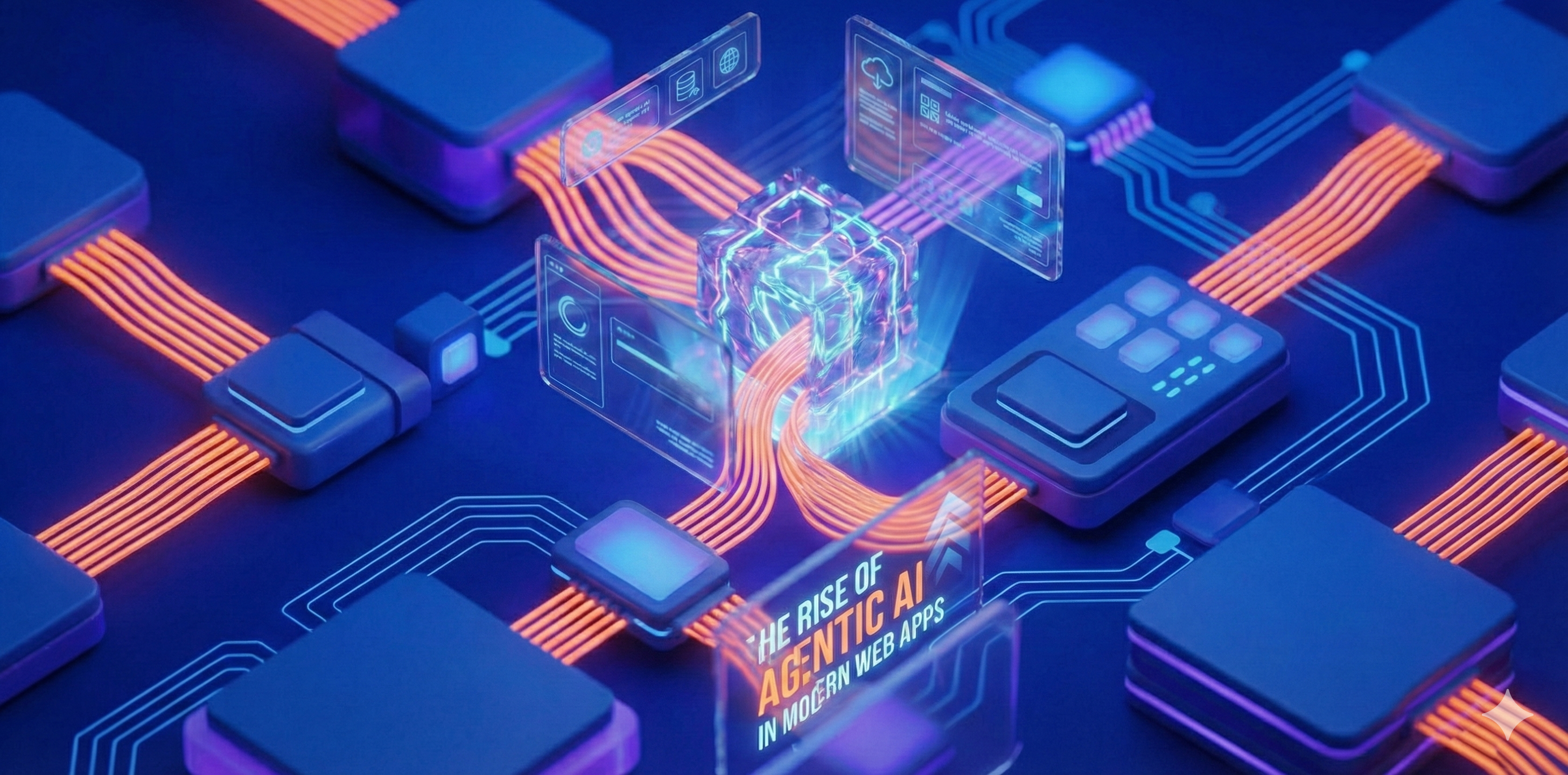
1. Inference as the Engine
Modern frameworks now include inference engines at the Edge. The UI doesn't just display; it recomposes itself in real-time to predictive models based on user intent. This marks the end of 'one-size-fits-all' interfaces.
2. Atomic Content Mesh
Content is now Atomic. Our systems store raw semantic nodes that an AI orchestration engine pulls across a global context mesh to assemble a unique experience on the fly. No two users ever see the same internet anymore.

3. Navigation by Dialogue
Traditional menus are becoming fallbacks. The primary mode of exploration is Intent-Based Dialogue. Users simply state an objective, and the agentic frontend manifests the interface required to achieve it.
The Verdict: Architecting Intelligence
At Ensight Focus, we recognize that your digital presence is no longer a destination to be visited, but an intelligence to be interacted with. We architect the systems that make this transition possible. The question for your brand is: Are you still handing out digital pamphlets, or are you ready to deploy an intelligent agent?